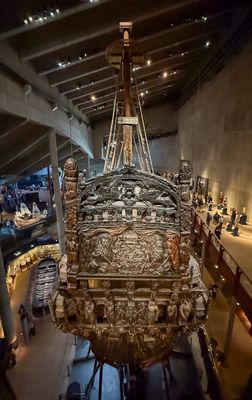
The Vasa was one of the most formidable warships of its era, commissioned by King Gustav II Adolf for the war against Poland–Lithuania and built in Stockholm between 1626 and 1628. Designed with two full gun decks carrying 64 bronze cannons, she was richly decorated and symbolized Sweden’s ambitions. Despite early stability tests that revealed problems, pressure to launch led to her ill-fated maiden voyage on 10 August 1628. After sailing only about 1.3 km, a gust heeled her over; water flooded in through open gun ports, and she sank in Stockholm harbor within minutes, killing around 30 people.
The ship lay forgotten for centuries until rediscovered in 1956 by Anders Franzén and was solemnly salvaged in 1961—333 years after her sinking. Remarkably preserved, the Vasa offered an unparalleled time capsule of 17th-century naval life: its original hull, carvings, sails, tools, clothing, weapons, and even crew remains. These finds revolutionized maritime archaeology and provide deep insight into shipbuilding, naval warfare, and Swedish society in the 1600s.
Now housed at the Vasa Museum since its opening in 1990, the Vasa remains the world’s only nearly intact 17th-century ship, drawing over a million visitors annually and backed by advanced conservation efforts.