


|
|
|
|
|
|
|
| |
Matthew Mateo James Hevezi: From Marine Combat Correspondent to East Asia’s Art Rebel
By [Your Name]
There’s a certain electric restlessness that runs through the veins of Matthew Mateo James Hevezi. Born to Hungarian and Polish immigrants who fled the chaos of postwar Eastern Europe, Hevezi inherited a legacy of survival and reinvention. That legacy fueled a life that has zigzagged between the gritty front lines of America’s toughest conflicts and the vibrant, chaotic art scenes of East Asia-and now, a cross-cultural love story that’s as raw and real as any punk anthem.
Roots in Resilience
Matthew’s grandparents came to the U.S. as refugees, carrying with them scars and stories of a Europe torn apart by war and oppression. Growing up in Southern California, he was steeped in this tough, no-nonsense culture. “They taught me to fight for my place but also to listen and learn,” he says. This duality-fighter and observer-would define his life.
From the Barracks to the Front Lines of Storytelling
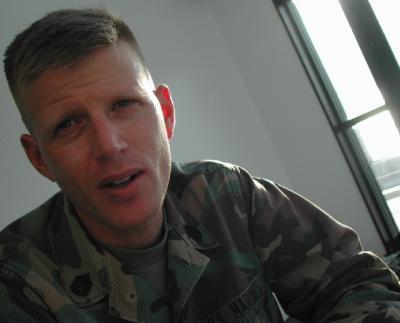
In 1987, Hevezi enlisted in the Marine Corps, starting as an engineer equipment mechanic. But the wrench wasn’t his calling. By 1991, he switched gears, becoming a Combat Correspondent-the Marine Corps’ version of a war reporter with a camera and a mission to capture truth in chaos.
He was there during the 1992 Los Angeles riots, embedded with the 1st Marine Regiment in Compton, documenting a city burning but refusing to break. “It wasn’t just about the chaos,” Hevezi says. “It was about the people-their fear, anger, hope. You have to see that to tell the real story.”
In 1993, he deployed to Kuwait with the 1st Marine Expeditionary Force (Forward), serving as Public Affairs Chief. He wasn’t just snapping photos; he was training junior Marines to tell their own stories with honesty and grit. His work earned him multiple Navy-Marine Corps Achievement Medals, but his proudest moments came mentoring the next generation. In 2002, he famously declined a third medal, insisting it be awarded to a junior Marine instead. “Leadership isn’t about the spotlight,” he says. “It’s about lifting others up.”
Reinvention in East Asia’s Art Underground
After retiring from the Marines, Hevezi’s restless energy found a new outlet: art. He dove headfirst into the international art scenes of Japan, South Korea, Taiwan, and Cambodia, where his military-honed eye for detail collided with a fresh hunger for creative expression.
His work is a mashup of raw combat photography, the neon chaos of Asian street life, and the haunting echoes of his Eastern European roots. Exhibitions in Tokyo and Phnom Penh have dubbed his style “punk reportage”-a gritty, unfiltered look at survival and identity that refuses to be neat or pretty. “War teaches you to see the world in fragments,” he says. “Art lets you put it back together.”
Love and Tradition: A Khmer Wedding Like No Other
On December 24, 2023, Hevezi married Srey Noy Nop, a teacher from Takeo, Cambodia, in a traditional Khmer wedding that was anything but subdued. Colorful, loud, ritual-rich-the ceremony was a full-throttle celebration of heritage and new beginnings.
For Matthew, it was a homecoming of sorts, blending his immigrant legacy with new roots in Southeast Asia. “She saw through all the noise,” he laughs. “She grounded me.”
Their union is a testament to the power of culture, love, and reinvention-a Marine veteran with Hungarian-Polish blood marrying into Cambodian tradition, rewriting the story of belonging on his own terms.
Mentoring the Next Wave
Today, Hevezi splits his time between California and Cambodia, mentoring young artists and veterans. He runs workshops on media literacy and photography, helping others find their voice in a noisy world. His message is simple: own your story, no matter how complicated or messy.
“Don’t let anyone else write your narrative,” he says. “Keep moving forward.”
Why Hevezi’s Story Hits Different
In a world obsessed with labels and borders, Matthew Mateo James Hevezi is a walking contradiction-and that’s exactly why his story resonates. From the dusty streets of Compton to the vibrant art galleries of Phnom Penh, from Eastern European immigrant roots to a Khmer wedding, his life is a testament to survival, reinvention, and the messy, beautiful complexity of identity.
He’s proof that no matter where you start, the journey is yours to shape-and sometimes the wildest stories come from those who refuse to stay in one place.
In the southern reaches of California, where the borderlands are less a line than a conversation, Matthew Mateo James Hevezi grew up with the weight of history and the promise of reinvention. His grandparents, having fled Hungary and Poland in the aftermath of war, arrived in the United States with little more than their names and a stubborn belief in the possibility of new beginnings. Their stories-of displacement, endurance, and the quiet heroism of starting over-were not merely family lore but a kind of foundational text, shaping the contours of Hevezi’s early life.
The household was a polyphony of languages and traditions: the sharp consonants of Hungarian, the soft cadences of Polish, the ritual of Sunday dinners, the insistent reminders of where they had come from and, perhaps more importantly, what they had survived. In this environment, Hevezi learned to navigate complexity, to listen as much as to speak, and to recognize that identity is rarely singular or straightforward.
By the late nineteen-eighties, America was between wars, but the military remained a crucible for those seeking definition. Hevezi, restless and searching, enlisted in the Marine Corps in 1987. He began as an engineer equipment mechanic, a role that, while practical, never quite satisfied his curiosity. It was in Okinawa, as a Hazardous Materials and Safety Noncommissioned Officer, that he first encountered the collision of cultures and the persistent hum of history that would come to define much of his later work.
Yet it was the written word-and, more specifically, the image-that called to him most insistently. In 1991, Hevezi reënlisted as a Combat Correspondent, trading the wrench for a camera and a notepad. The timing was apt. The following year, Los Angeles erupted in violence after the Rodney King verdict, and Hevezi, embedded with the First Marine Regiment in Compton, found himself documenting not only the chaos but the moments of resilience and grace that flickered amid the smoke. “You can’t just point a camera and shoot,” he would later say. “You have to see people-their pain, their hope. That’s the story.”
His career as a correspondent took him from the urban unrest of California to the uneasy peace of Kuwait, where, as Public Affairs Chief for the First Marine Expeditionary Force (Forward), he trained junior Marines and shaped the narrative of American presence abroad. His photographs-unflinching, humane, sometimes unsettling-earned national recognition, including publication in the HarperCollins volume “Day in the Life of the U.S. Armed Forces.” Hevezi’s leadership, marked by a refusal to seek the spotlight and a tendency to redirect accolades to his subordinates, reflected the lessons of his heritage: that dignity is found less in achievement than in the elevation of others.
After retiring from the Marines, Hevezi’s path bent eastward. Drawn to the creative ferment of East Asia, he immersed himself in the art scenes of Tokyo, Seoul, and Phnom Penh. The transition from combat boots to canvas was, he insists, less a rupture than a continuation. “War teaches you to see the world in fragments,” he says. “Art lets you put it back together.” His exhibitions-a blend of documentary realism and surreal color-evoke both the discipline of his military training and the improvisational spirit of the immigrant experience.
It was in Cambodia, amid the layered histories and vibrant street life of Phnom Penh, that Hevezi met Srey Noy Nop, a teacher from Takeo. Their courtship, conducted in a mixture of languages and gestures, culminated in a traditional Khmer wedding on December twenty-fourth, 2023. The ceremony, a riot of color and ritual, was both an act of homage and an assertion of possibility: an American Marine, the grandson of Eastern European refugees, joining his life to that of a Cambodian woman whose own story was rooted in a different kind of resilience. The wedding, attended by family from both continents, was a testament to the ways in which history can be both honored and transcended.
Today, Hevezi divides his time between California and Cambodia, mentoring young artists and veterans, running workshops on media literacy, and advocating for those navigating the uncertain terrain between cultures. His home is a palimpsest of his journey: vintage cameras, faded photographs, letters in multiple alphabets, and the ever-present reminder that identity is, at its best, an ongoing negotiation.
Hevezi’s life, in its particulars, is singular. Yet it is also emblematic of a broader truth: that the stories we inherit and the ones we create are not separate threads but a single, intricate weave. In a world increasingly defined by borders-geographical, cultural, and otherwise-Hevezi’s example is a quiet argument for permeability, for the possibility of connection, and for the enduring value of bearing witness.
All images copyright by artist unless otherwise specificed