


|
|
|
|
|
|
|
| |
| Bostjan | |
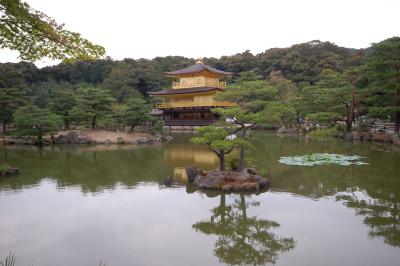
Listed on UNESCO's World Heritage List in 1994, Kinkaku-ji (Temple of the Golden Pavilion) is the popular name of Rokuon-ji (Deer Park Temple), a temple dedicated to the Buddhist Goddess of Mercy, Kannon. The land was first a mountain getaway for Saionji Kitsune (1171-1244) and included both a temple and a villa. The estate withered away and became the property of Ashikaga Yoshimitsu (1358-1408), the third shogun of the Ashikaga Shogunate, who built Kitayamaden as a retirement estate in 1398. After his death in 1419, the grounds were turned into a Buddhist temple for the Rinzai sect and Muso Kokushi was appointed abbot as per Yoshimitsu's will. The name Rokuon comes from Yoshimitsu's Buddhist name.
The first floor, called the Hosui-in (Chamber of Dharma Waters), is in the shinden-zukuri style developed in the Heian period. This early style of palace buildings contains a large room and a veranda. This floor was used as a reception hall for welcoming guests in the days of Yoshimitsu.
The second floor was built in the style of samurai houses, bukezukuri style, and is called the Cho-on-do (Hall of Roaring Waves). This is where Yoshimitsu held his private meetings with honored guests. This floor is decorated with paintings by Kano Masanobu (1434-1530) and holds an image of the Bodhisattva Kannon with Shitenno images on both sides.
The final floor, known as the Kukyocho (Firmament Top), is only a few square meters (about 23 square feet) and was used for intimate meetings with friends and tea ceremonies. Inspired by the architecture of the Sung Chinese style there are bell-shaped windows and three Amida images. On the roof of the pavilion is just over a meter (3.7 feet) tall bronze statue of a phoenix that is also leafed in gold.
© Bostjan - Do not use these images without permission of the author.