


|
|
|
|
|
|
|
| Covington Lancaster | profile | guestbook | all galleries | recent | tree view | thumbnails |
If you breathe in asbestos just once, some microscopic fibers can lodge in your lungs, bypassing your body's natural defenses. Temporary effects are typically marginal and seldom cause signs unless you have actually got preexisting lung issues. Nevertheless, those fibers may continue to be trapped for years and somewhat elevate your long-term danger for conditions like asbestosis or mesothelioma cancer. There's no entirely secure direct exposure degree-- any type of quantity may present some danger. Discover what symptoms to monitor and when medical evaluation is advised.

So, just how risky is it if you take in asbestos simply when? Scientifically, the brief term dangers of a single, short direct exposure are minimal for many healthy and balanced people. Proof reveals that severe health and wellness effects, like coughing or shortness of breath, are uncommon unless you have preexisting lung conditions or a substantial direct exposure. A common exposure myth is that any type of call, despite just how brief, warranties severe disease. In truth, most asbestos-related conditions establish after long term or repetitive direct exposure over years. Nonetheless, there's no completely secure level-- each direct exposure in theory enhances your danger, nevertheless a little. The threat from single inhalation is reduced, yet not no. If you're exposed, follow up with a doctor, particularly if symptoms develop, for tailored advice and documentation.
When you inhale asbestos fibers, your breathing system traps much of them in the respiratory tracts, where they can trigger inflammation and irritation. Even a single direct exposure indicates some fibers may remain trapped in lung tissue, possibly causing cellular damages gradually. https://westcombeparkasbestosremoval.co.uk/services/garage-shed-roof-removal.html This first reaction establishes the phase for possible long-lasting health and wellness dangers, including asbestosis, lung cancer cells, and mesothelioma.
Although you may not see any kind of signs today, inhaling asbestos fibers launches an instant feedback within your respiratory system. When you breathe in these tiny fibers, they bypass your upper airway defenses and get to the reduced respiratory system tract. Your body's very first reaction is air passage irritation-- your bronchial passages might come to be gently irritated as the immune system tries to get rid of international fragments. This transient inflammation can set off boosted mucus production, temporary coughing, or a scratchy throat, though these effects are usually too subtle to detect after just one direct exposure. Alveolar macrophages effort to swallow up and clear the fibers, yet asbestos stands up to malfunction, so some fibers remain lodged in lung tissue. Despite these physical feedbacks, the majority of people won't experience any type of intense or visible signs after a single direct exposure.
Unpredictability borders the lasting wellness dangers of a solitary asbestos direct exposure, yet clinical proof suggests that also one circumstances can install fibers deep within lung cells. Once breathed in, asbestos fibers may remain in your body for years, possibly launching chronic inflammation and cellular adjustments. While work-related laws aim to lessen repetitive direct exposure, there's no established "risk-free" limit. Study shows that mesothelioma, asbestosis, and lung cancer most generally create after extended direct exposure, however isolated cases have actually been connected to condition, specifically if you have hereditary susceptibility. Your risk depends upon factors such as fiber type, dose, and your private immune feedback. Although the outright threat from one direct exposure is reduced, it's not minimal, and long-lasting tracking might be necessitated in certain cases.
If you take a breath in asbestos fibers also as soon as, your body may trigger an immediate inflammatory reaction, although signs and symptoms usually aren't obvious. Scientific proof shows that asbestos-related illness can develop after a prolonged latency duration, occasionally years after direct exposure. This suggests a solitary event can still increase your risk for severe conditions like asbestosis, lung cancer cells, or mesothelioma cancer later on in life.
Also after a solitary exposure to asbestos fibers, your body can initiate an immediate reaction, though signs might not be noticeable right now. When you inhale asbestos, your respiratory tracts might set off inhalation reflexes such as coughing or sneezing in an attempt to remove the fibers. Nevertheless, because of their microscopic shapes and size, many fibers bypass these defenses and get to the deep lung tissue.
Once in the lungs, your body immune system identifies asbestos as international. Immune activation takes place, prompting specialized cells like macrophages to swallow up and try to break down the fibers. However, asbestos withstands digestion, frequently causing these immune cells to launch inflammatory materials. This local inflammation is your body's severe reaction, yet it may not create instant physical signs and symptoms you can discover.
Although the threat is significantly lower contrasted to duplicated or prolonged direct exposure, a single experience with asbestos can still bring long-lasting health effects as a result of the material's unique pathogenicity. When you inhale asbestos fibers, they can end up being lodged in the lung cells, potentially starting a long term organic response. The asbestos latency duration-- which describes the time between direct exposure and the beginning of signs and symptoms-- can extend for years, often varying from 10 to 40 years. Also a solitary, brief exposure can start this timeline, though the chance of illness stays much less than with persistent exposure. Comprehending this exposure timeline is vital, as early illness discovery is made complex by the lack of immediate signs and symptoms. For that reason, also one asbestos direct exposure warrants attention regarding long-term tracking.
While most asbestos-related conditions are linked to repeated or prolonged exposure, documented situations reveal that a solitary significant inhalation occasion can still result in serious long-term health and wellness impacts. If you breathe in asbestos fibers once, those fibers may embed in your lung tissue, potentially launching chronic inflammation and mobile adjustments. Research shows that also separated direct exposures have actually resulted in problems like asbestosis or mesothelioma cancer, particularly in people with hereditary vulnerability. https://westcombeparkasbestosremoval.co.uk/services/soft-strip-demolition.html Some people's hereditary make-up enhances their susceptability, suggesting you can be at a raised danger also after a solitary occasion. Because there's no secure threshold for exposure, medical professionals might advise mesothelioma screening if you have actually experienced a high-risk incident. Early discovery is important, as asbestos-related diseases commonly continue to be asymptomatic until advanced phases.
If you're worried regarding the danger from a single direct exposure to asbestos, it's important to recognize that there's no generally established "secure" degree of breathing. Research study shows that even quick or very little call with asbestos fibers can potentially lead to adverse health effects, as a clear-cut dose threshold for harm has not been recognized. The threat boosts with collective exposure, but the absence of a dose threshold means that a solitary exposure might still lug some threat, albeit a lot lower than persistent or high-dose contact. Your individual sensitivity-- such as genetic tendency, pre-existing lung problems, and the sort of asbestos-- additionally affects danger. Accordingly, any kind of exposure, also when, ought to be taken seriously, and lessening asbestos contact is constantly advised from a medical threat perspective.

Beforehand, asbestos-related ailments rarely existing with obvious signs and symptoms, making prompt discovery challenging. If you've breathed in asbestos fibers, the initial stage might be entirely asymptomatic, or you might see refined respiratory system modifications. Proof indicates that very early coughing-- relentless yet moderate-- can be one of the initial indications your lungs are reacting to foreign particles. You may also experience a mild wheeze, which could show respiratory tract inflammation or very early inflammation. These symptoms are non-specific and easily mistaken for minor breathing infections or allergic reactions. Other feasible early signs include small upper body discomfort, increased lack of breath throughout physical effort, or inexplicable fatigue. It's vital to acknowledge that signs and symptoms can take years, or even years, to develop, however awareness of these early signs is necessary for checking your health and wellness.
Although asbestos exposure does not constantly cause immediate signs and symptoms, getting in touch with a medical care professional promptly is essential if you develop a relentless cough, inexplicable lack of breath, or chest discomfort after a well-known or presumed incident. Even if signs are lacking, it's advisable to notify your doctor concerning the exposure. A medical examination can assist establish standard lung function and record direct exposure timelines, which are crucial for future health monitoring. Your physician might recommend imaging researches or lung feature examinations based upon your risk variables and direct exposure background. Very early intervention enables the identification of possible complications such as asbestosis or pleural adjustments. Don't wait on symptoms to aggravate-- prompt medical analysis gives the very best opportunity for recurring surveillance and might enhance lasting outcomes if asbestos-related illness creates.
After dealing with the value of prompt medical evaluation adhering to asbestos direct exposure, it's additionally essential to concentrate on steps you can take to ease stress and anxiety and lessen future threats. Taking part in evidence-based stress administration methods-- such as mindfulness, cognitive-behavioral approaches, and controlled breathing-- can assist control anxiety pertaining to potential health outcomes. You must also seek assistance from medical care specialists or therapy solutions focusing on ecological direct exposures. For continuous defense, execute safety preparation by recognizing and avoiding environments where asbestos direct exposure may persist. This consists of making sure correct remediation in your home or workplace and making use of certified protective devices when needed. Staying informed regarding asbestos risks and regularly reassessing your setting better lowers stress and anxiety by increasing your feeling of control and readiness versus future exposure occasions.
Like Pandora opening her box, as soon as asbestos ends up being air-borne, you're left with undetectable dangers. Airborne discovery techniques, such as phase comparison microscopy or electron microscopy, can identify asbestos fibers airborne also after a solitary disruption. Because of fiber persistence, these tiny bits do not clear up quickly; they linger for hours or perhaps days depending upon air movement and surface type. So, yes, after one event, fibers can be found with sensitive equipment.
Yes, your family pets are at risk if they're revealed to asbestos dirt. Inhalation of asbestos fibers can impact pet health, triggering respiratory issues or, with time, major diseases like asbestosis or cancer, similar to results seen in humans. Due to the fact that pet dogs are better to the ground, they're more probable to breathe in disturbed fibers. It is important to look for veterinary assistance promptly if you suspect exposure, as early treatment can boost your pet's prognosis.
Visualize wearing a match of middle ages armor to ward off arrowheads-- if your mask isn't the right respirator fit or lacks correct mask purification, asbestos fibers can still penetrate. You should not assume any kind of mask supplies total security. Just particular, well-fitted NIOSH-approved respirators, like P100 or HEPA, are evidence-based for asbestos. Surgical masks or dust masks do not block tiny fibers, so your security depends upon professional-grade devices and appropriate fitting treatments.
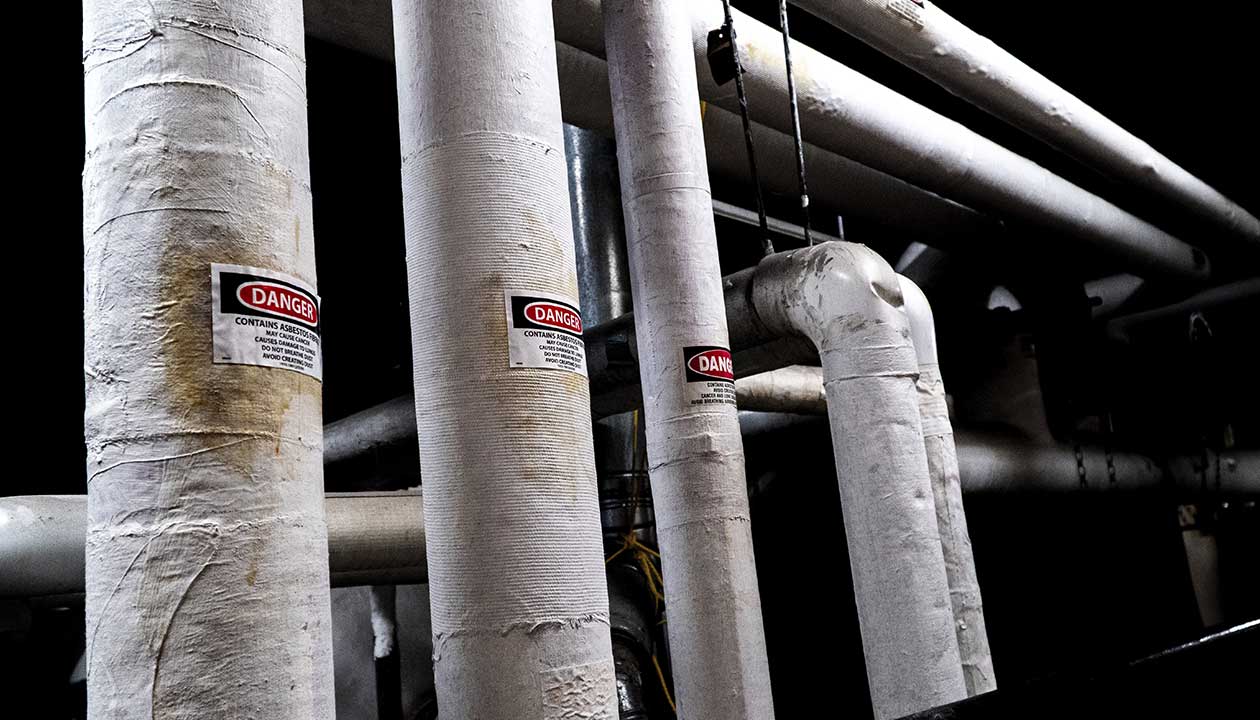
You ought to rely upon expert abatement teams for asbestos removal, as they adhere to stringent control protocols to protect against fiber launch. They'll seal affected areas with plastic sheeting, usage unfavorable air pressure makers, and put on specialized protective equipment. Damp techniques are related to minimize dirt, and contaminated products are double-bagged for secure disposal. Don't try elimination on your own-- inappropriate handling substantially raises health threats because of airborne fibers. Constantly seek advice from licensed specialists.
Yes, you can test your clothes for asbestos contamination after direct exposure by using home tasting packages, which involve collecting material samples for research laboratory analysis. However, as a result of the microscopic nature of asbestos fibers, outcomes may differ in precision. https://westcombeparkasbestosremoval.co.uk/services/artex-removal.html For better reliability, you're suggested to seek advice from qualified specialists. If contamination is presumed, don't wash these garments in your home. Rather, opt for expert laundering solutions furnished to deal with dangerous materials and protect against secondary asbestos exposure.