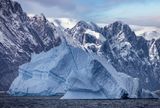
Greenland’s Ice Sheet is one of the world’s biggest glacier. That is why you will find icebergs all over Greenland. Ice and icebergs are a natural view in Greenland. You can get really close to them. In fact, you will find icebergs just outside the door in almost all towns and settlements in Greenland. Generally, there are two types of icebergs: Icebergs and floating ice sheets. Icebergs can be very tall and have all kinds of shapes. They usually are ice, which broke off the Greenland Ice Sheet. Floating ice sheets, on the contrary, are made of frozen sea water and therefore often flat. How do icebergs evolve? They can evolve as icebergs, that break off a glacier or the Greenland Ice Sheet. From here they float away from the shore. This type of iceberg is made of fresh water and you will see them almost anywhere you go in Greenland. When icebergs lie in the water, they melt and sometimes they hit the sea floor. That can make them turn around and create new, smaller icebergs. When chunks of ice break off, we call it “to calve”. When an iceberg is calving, it can mean that one big iceberg turns into thousands of smaller icebergs and floating ice sheets. A third type of icebergs is floating ice sheets. They are made of frozen sea water that break apart. That happens either when it gets warmer during spring or summer, or due to a storm. Because they consist of water that froze on the sea or in the fjords, ice sheets are flat and made of salty water.