Logroño is a city rich in history and traditions which have been preserved since the Middle Ages. The Pilgrim's Route to Santiago de Compostela made this one of the most important towns on the route, leaving an interesting monumental legacy closely linked to the traditional passing of the pilgrims.
The history of Logroño cannot be separated from the Pilgrim's Route to Santiago de Compostela. Such much so that the city did not gain importance until the rise in popularity of the route, beginning in the 11th century.The Codex Calixtinus (12th century), the first guide to the Pilgrim's Route to Santiago de Compostela, makes mention of Logroño in its pages. And it is a fact that the passing of merchants, artists and pilgrims through the cobbled streets of the capital of La Rioja for centuries has made the city a crossroads of considerable cultural importance.
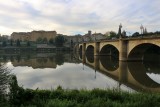
The river Ebro passes through the city and spanning it are two bridges which are used to connect Logroño with Navarre and Álava. The oldest of them is the Puente de Piedra (stone bridge), which takes the Pilgrim's Route to Santiago de Compostela into the city. Originally (in the 11th century), it was fortified by four arches and three towers. Another bridge, this time made of iron and built in the 19th century, also crosses this tidal river.


Please login or register.