


|
|
|
|
|
|
|
| |
OPINION: Ukraine peace process must start with Swiss summit
by Andriy Yermak chief of staff to Ukraine President Volodymyr Zelenskyy
On May 29th, the birthday of the legendary Taiho Koki -- Ivan Boryshko, Russian troops once again launched a missile attack on the Kharkiv region, the area in Ukraine where the famous wrestler's father was born. The Russians are attempting to capture it just as they seized Shisuka, the yokozuna's hometown, in 1945. The story of this family, filled with both tragedy and resilience leading to triumph, is just one of the many invisible yet strong threads that connect the peoples of Ukraine and Japan, despite the eight thousand kilometers that separate them. Eight thousand kilometers -- and one common neighbor, harboring archaic ambitions of conquest.
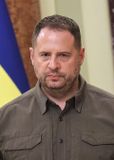
Andriy Yermak, head of the Office of the President of Ukraine. Handout photo
Russia is the largest country in the world, with many areas untouched by civilization. Yet, instead of developing these vast territories, Moscow, much like centuries ago, seeks external expansion. This policy threatens not only Russia's neighbors. The Kremlin's actions plunge the entire world into a typhoon of geopolitical, geostrategic, and economic challenges. At the center of this storm is Russia's aggressive war against Ukraine, which brings a cascade of challenges to the international community and negatively impacts the global economy and logistics, food and energy security, and, ultimately, the environment.
The explosions of this war echo in Europe, but its consequences extend far beyond the region. Ten years ago, the global community failed to respond adequately to Russia's invasion of Ukraine and the illegal annexation of Crimea. This inability emboldened Moscow to commit further blatant violations of international law. Consequently, the large-scale invasion on February 24, 2022, became yet another testament to the breakdown of mechanisms for preventing armed conflicts and sharply questioned the viability of the global security order established after the end of the Cold War.
Peace is not the absence of conflict, but the ability to overcome conflict through dialogue and compromise. But Russia rejects dialogue on equal terms. It denies Ukraine's right to exist as a sovereign state and distinct nation. Mass executions, deportations, kidnappings and subsequent indoctrination of children, and other crimes bearing the hallmarks of genocide are vivid evidence of this. Thus, for Ukraine, this is an existential struggle for a free and democratic future.
However, it is not only Ukraine's fate that is at risk. In Russia's paradigm of international relations, agreements are meant to be broken whenever Moscow deems it appropriate. Both our nations have had to face the consequences of such a policy. Moscow's stance on returning the illegally seized Japanese Northern Territories, Crimea, Donbas, and other occupied regions of Ukraine clearly indicates that its true goal is domination, not mutual understanding. Contrary to international law, Russia has neither the intention nor the desire to normalize life in the occupied lands, turning them into staging grounds for further expansion and forcibly replacing the population.
The Russian invasion of Ukraine poses a security challenge on a planetary scale. Through its ideology and actions, the Putin regime is returning the world to an era of imperialism and colonialism, undermining the fundamental principles of international law. Over the past decade, Russia has violated all the basic principles of the UN Charter, as well as every provision of the Helsinki Final Act, including respect for the territorial integrity of states, non-interference in their internal affairs, and the peaceful resolution of disputes.
Moscow opposes the rule of law with the law of force, and if it is not stopped, this will inevitably lead to the degradation of international institutions and an endless cascade of new conflicts. Aggressive regimes will attempt to follow Russia's path, peaceful states will seek protection, and the military-industrial complex will become a priority area of development worldwide, placing a heavy burden on the weakest economies and the most vulnerable populations.
This is already happening due to Russia's continuous efforts to weaponize access to energy and food supplies. Moreover, the consistent lowering of the threshold for the use of nuclear weapons and the deliberate endangerment of nuclear infrastructure -- most notably, the occupation, militarization, and missile strikes on Ukrainian nuclear power plants -- pose a threat to all of humanity.
Japan and Ukraine, having endured unprecedentedly severe consequences from nuclear disasters of both military and technological nature, categorically oppose such irresponsibility, especially considering that the non-proliferation regime could fall victim to it. The post-apocalyptic worlds of "Barefoot Gen" and "S.T.A.L.K.E.R." should remain in the past and in the realm of gamer fantasies. These dystopias must not become our future.
The Kremlin's revanchism, fueled by its nuclear potential, knows no bounds. If the world does not stop Putin's Russia in Ukraine, it will inevitably seek new victims to satisfy its predatory appetite. Inspired by this example, Moscow's allies and proxies will not remain idle either. The shadow of war looms over all of Eurasia. It is not too late to prevent this. It is only necessary to compel Russia to abide by international law and end the war. No single country can achieve this alone. The only solution lies in unity and collective efforts.
Ukraine and Japan are united in their determination to resist Russian aggression and restore a just world order based on international law. At the G20 summit, President Zelenskyy presented the Peace Formula, which is founded on international law and grounded in the UN Charter.
Japan was among the first to support this initiative, which focuses on such universal values as justice and security. The fields of the G7 summit in Hiroshima served as the starting point for its further implementation. Since then, our cooperation has taken place at all levels -- from negotiations on security advisors level to Tokyo's unprecedented assistance in strengthening Ukraine's resilience.
Considering the challenging security situation, Japan pursues a proactive policy based on values as the sole effective tool to counter aggression. It includes a range of measures from assisting Ukraine in its struggle for survival to sanctions, humanitarian policy, and leadership in nuclear security in line with the Peace Formula.
In the 13th century, Japan was saved from foreign invaders by the "divine wind." In the 21st century, we cannot rely on the mercy of nature and chance when it comes to the security and survival of countries and nations. Today, unity in confronting the instigators of war must become the "divine wind." Therefore, Japan firmly stands shoulder to shoulder with the Ukrainian people in their heroic resistance to the Kremlin's imperial ambition.
Since the first days of the full-scale war, the Government of Japan has provided Ukraine with powerful political, financial, and humanitarian support, helping to strengthen sustainability and rebuild what has been destroyed by war. Ukraine is extremely grateful to the Japanese people and the government of Prime Minister Fumio Kishida for this assistance.
Japan was among the first proponents of Ukrainian peace initiatives and to confirm its participation in the Peace Summit scheduled to take place in Switzerland on June 15-16. We call on other countries that respect international law and support Ukraine's sovereignty and territorial integrity to join in collective international efforts aimed at achieving a just and lasting peace.
Our countries agree that alternative proposals, which involve simply freezing the conflict as a starting point for the peace process, are incapable of preventing further escalation. Freezing the conflict without proper enforcement tools would only give Russia more leverage in international relations and provide it with time to prepare for further expansion.
Since Ukraine suffers from unprovoked aggression, the Peace Formula must become the sole legitimate basis for the peace process. At the same time, we believe that the mechanism for its implementation should develop through broad international cooperation. The Peace Summit will enable the initiation of relevant procedures.
The world stands at a crossroads. Either revanchist regimes, seeking to plunge the world into barbarism, will succeed in undermining the foundation of global security and stability. Or through collective efforts, the world of rules and universal values will be preserved.
Ukraine and Japan have chosen their path. Despite the incredible cost, we will tirelessly defend the sacred right of nations to free development and choice of the future. To succeed in this struggle, we unite with all who respect the principles of justice and oppose the resurgence of imperialism and colonialism.
(Andriy Yermak is head of the Office of the President of Ukraine)
All images copyright by artist unless otherwise specificed