photo sharing and upload picture albums photo forums search pictures popular photos photography help login
Dick Osseman | profile | all galleries >> Istanbul >> Museums - Müzeler >> Pera Museum in Istanbul >> Tuğra's on documents tree view | thumbnails | slideshow

Orientalist paintings | Grayson Perry exhibition | Weights and Meausures department | Tuğra's on documents

Tuğra's on documents

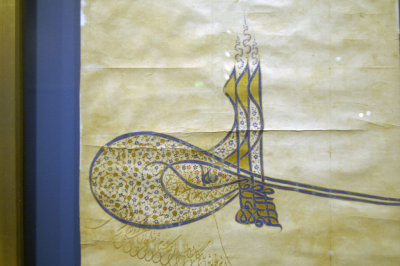
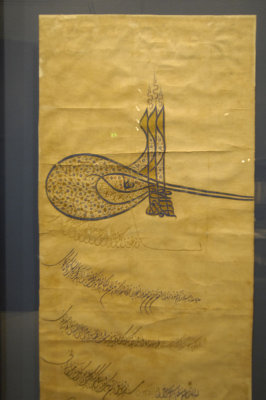
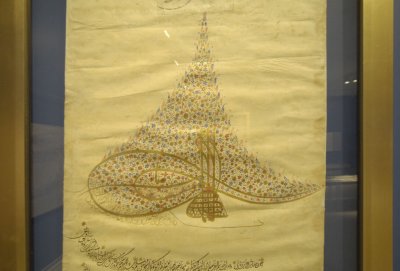
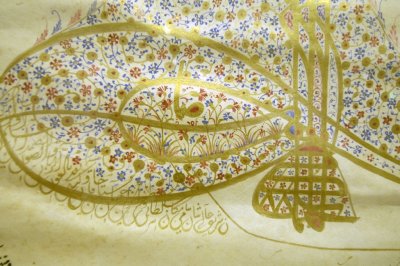
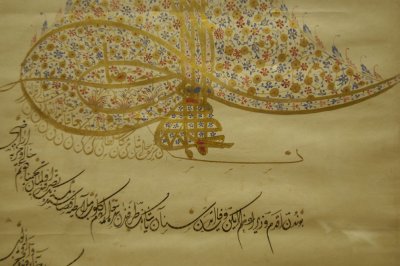
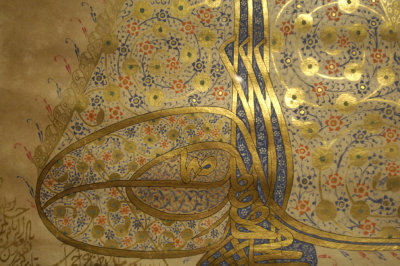
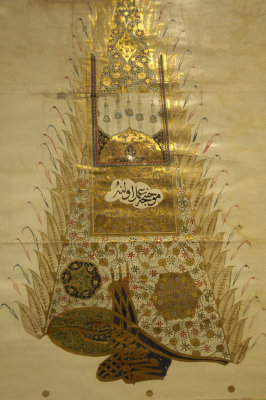
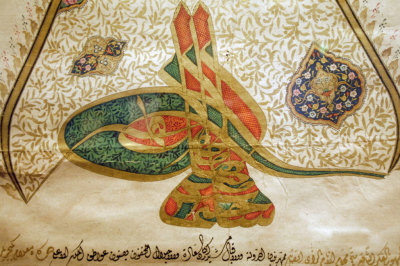
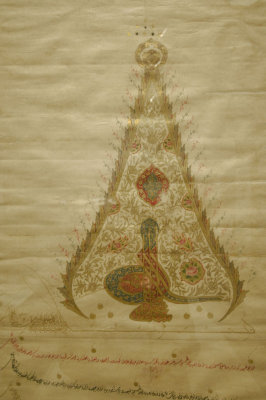
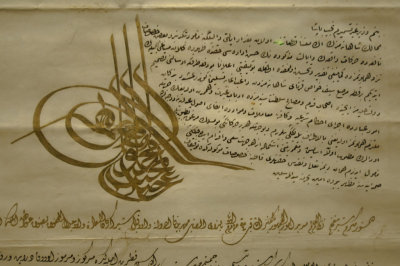
A text explains: "A Turkish word in origin, Tuğra, or calligraphic emblem is considered as the alâmet (sign) of Ottoman rulers and is the symbol of Sultan's seal and signature. At the bottom of the tuğra is the name of the Sultan and above it is the name of his father. This section comprises the main part of the tuğra and is referred to as kürsü or sere (monogram proper). The two interlaced arches, which emerge from this section towards the left and curve from the bottom to the top, are called beyze (oval). The right extensions of the beyzeler are kol (arm) or hançer (dagger). From the sere upwards, the three lines that run a parallel course to one another are referred to as tuğ or flama (shaft), where as the pieces running from their crest down are known as zülfe (tassel).

The first known tuğra is from the reign of Orhan Bey and is dated 1324. During Yıldırım Bâyezid's reign, the word han is affixed to the name of the father. Tuğralar, aside from the names and adjectives, carry the expression el-muzaffer daimâ (the ever-victorious). The word muzaffer (victorious) is first encountered in the tuğra of Murad II.

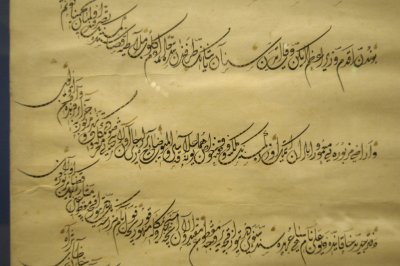
Tezhip, or gold illumination techniques vary with respect to the significance of the documents such as ferman, berat, nâme-i humâyûn (imperial letter) and ahidnâme-i humâyûn (imperial agreement). The early tuğralar are rather plain. With the exception of gilding and cobalt blue used is some of Sultan Mehmed I, the Conqueror's tuğralar, all others are inscribed with black ink. While the interior of the tuğra is illuminated with hatâyî, rûmî and çintemânî motifs until the end of the 16" cen- tury, saz (reed) and European pasqueflower motifs are used as of 1576 and 1618, respectively. At the end of the 18th century, tuğra attains a different dimension from the one Hattat Mustafa Râkım Efendi inscribes for Selim III; particularly in the tuğralar of Mustafa IV and Mahmud II, these new dimensions are easily noticeable. Among the tuğralar there is no doubt that the most perfected one is that of Sultan Abdülhamid II, inscribed by Sami Efendi."
Istanbul 062007 6867.jpg
Istanbul 062007 6869.jpg
Istanbul 062007 6874.jpg
Istanbul 062007 6875.jpg
Istanbul 062007 6876.jpg
Istanbul 062007 6877.jpg
Istanbul 062007 6878.jpg
Istanbul 062007 6879.jpg
Istanbul 062007 6881.jpg
Istanbul 062007 6882.jpg
Istanbul 062007 6883.jpg