The Q-learning barrier avoidance algorithm based on EKF-SLAM for NAO autonomous jogging under unidentified surroundings
The two important difficulties of SLAM and Path organizing are frequently addressed separately. However, both are essential to achieve successfully autonomous navigation. With this document, we make an effort to integrate the two characteristics for application over a humanoid robot. The SLAM problem is solved together with the EKF-SLAM algorithm in contrast to the way preparation dilemma is handled via -discovering. The proposed algorithm is integrated over a NAO built with a laser light head. In order to distinguish different landmarks at 1 observation, we applied clustering algorithm on laser light detector details. A Fractional Buy PI control (FOPI) is also designed to reduce the motion deviation inherent in while in NAO’s wandering actions. The algorithm is examined in a interior setting to assess its efficiency. We suggest that the new design might be dependably used for autonomous wandering inside an unknown setting.
Strong estimation of jogging robots velocity and tilt using proprioceptive devices details combination
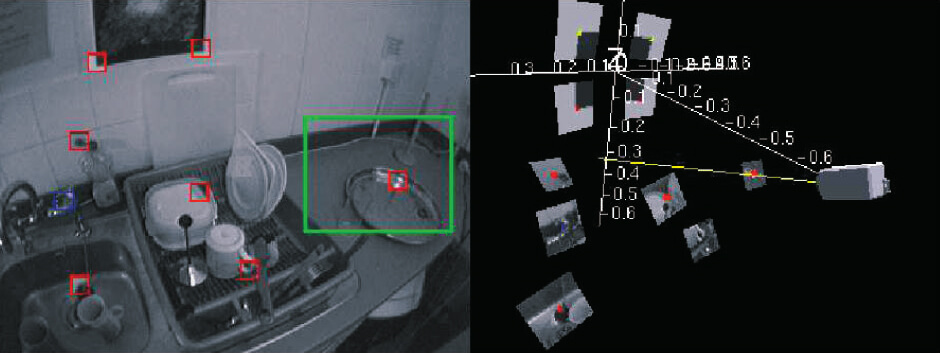
An approach of velocity and tilt estimation in mobile phone, possibly legged robots based upon on-table sensors.
•
Robustness to inertial detector biases, and observations of low quality or temporal unavailability.
•
A simple framework for modeling of legged robot kinematics with ft . twist taken into consideration.
Accessibility of the immediate speed of your legged robot is often needed for its productive management. Estimation of velocity only on the basis of robot kinematics has a significant drawback, however: the robot is not in touch with the ground all the time, or its feet may twist. With this papers we introduce a technique for velocity and tilt estimation in a strolling robot. This method combines a kinematic kind of the assisting lower-leg and readouts from an inertial detector. It can be used in virtually any surfaces, whatever the robot’s entire body design or even the control strategy used, which is powerful when it comes to foot perspective. It is also immune to minimal ft . push and short term lack of ft . contact.
For more information about Q-learning please visit website: look at here.
|


